Personal Loan Statistics: 2026


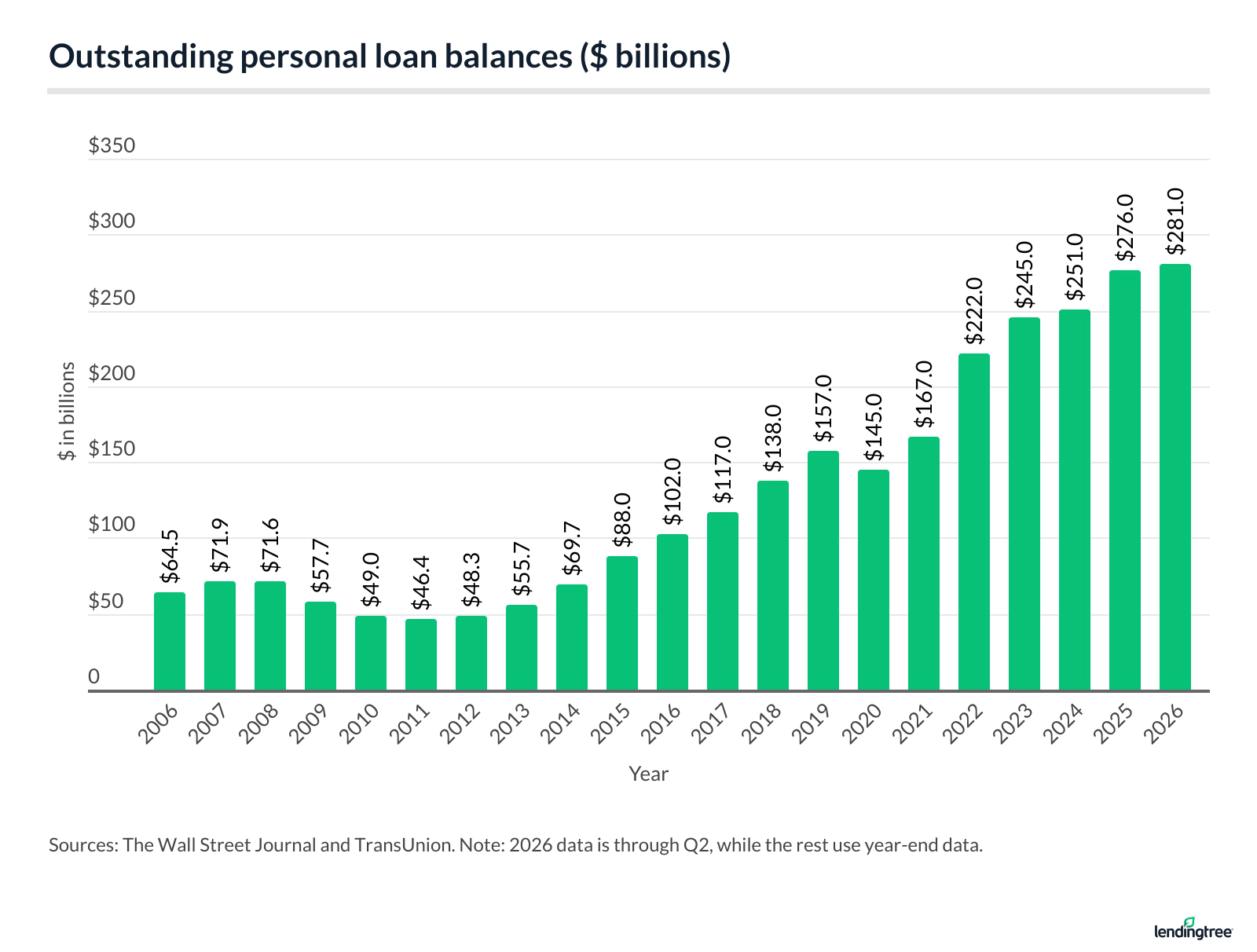
Americans hold $281 billion in personal loan debt across 26.9 million consumers. While this is far less than Americans owe on mortgages, auto loans or credit cards, personal loan balances have grown steadily in recent years.
Explore how consumers use personal loans and how this form of borrowing affects household finances. These personal loan statistics provide a closer look at borrowing trends and debt levels.
- Americans owe $281 billion in personal loan debt as of the second quarter of 2026, an increase of $4 billion from the previous quarter and $24 billion from a year earlier, a 9.3% year-over-year rise.
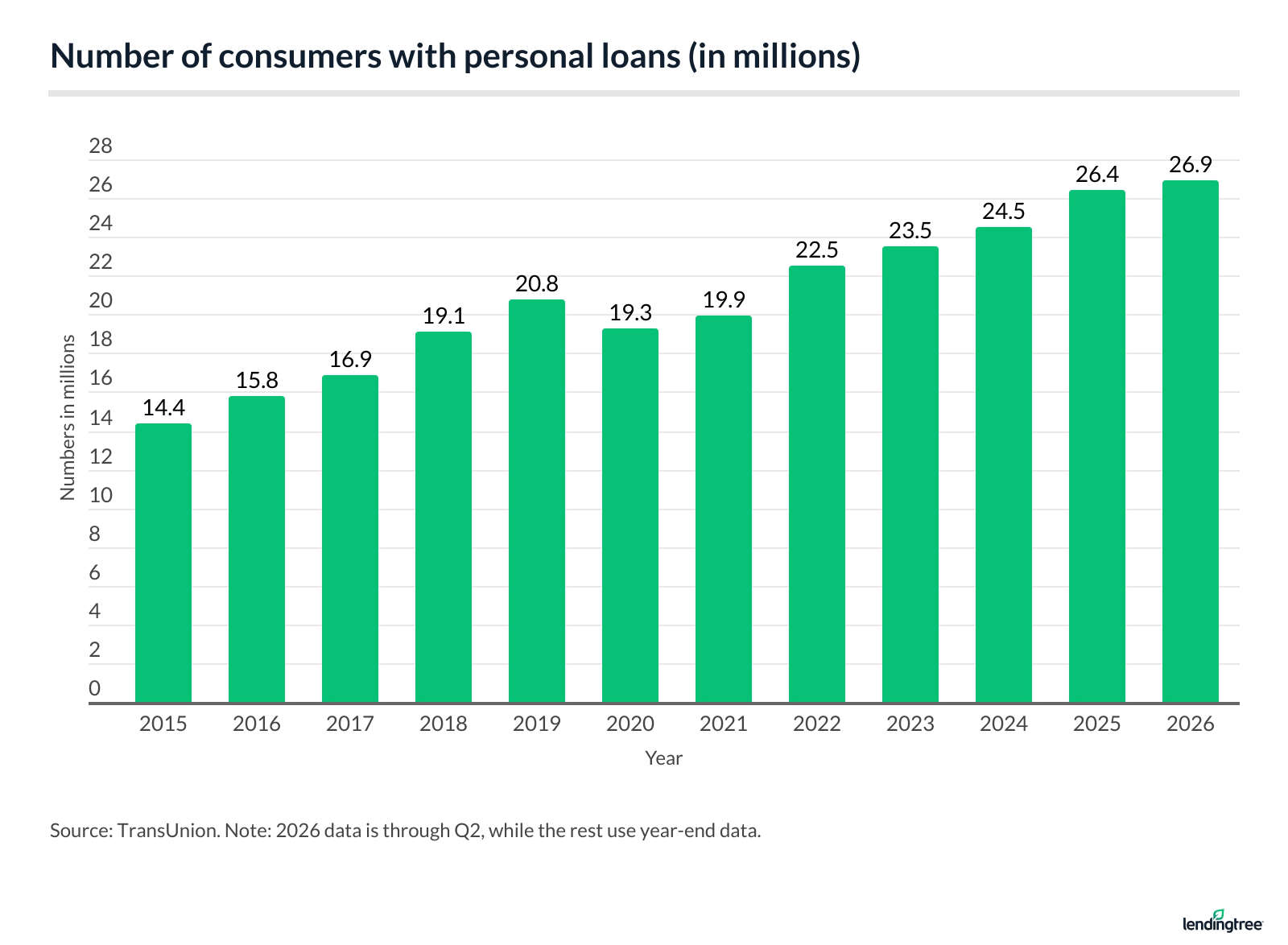
- 26.9 million Americans have a personal loan as of Q2 2026, up from 24.8 million a year earlier, an 8.5% increase.
- Personal loan debt accounts for 1.5% of all outstanding consumer debt as of Q2 2026. Personal loans account for 5.4% of nonhousing consumer debt. By comparison, Americans owe $1.263 trillion in credit card debt, equal to 6.7% of total outstanding consumer debt.
- The delinquency rate (60 days or more past due) for personal loans is 3.81% as of Q2 2026. This is up from 3.37% a year earlier.
- The average personal loan debt per borrower is $11,694 as of Q2 2026. That’s up slightly from $11,676 a year earlier.
- More than half of borrowers (52.4%) take out a personal loan to consolidate debt or refinance credit cards. Paying everyday bills is the second most common reported reason at 8.5%.
Americans owe $281 billion in personal loan debt
Personal loan borrowers owe $281 billion as of Q2 2026, up $4 billion from the previous quarter and at the highest level in more than 20 years of available data. That’s a 9.3% increase from Q2 2025, when Americans owed $257 billion.
The chart below shows how total personal loan debt has changed over time.
26.9 million Americans have a personal loan
As of Q2 2026, 26.9 million Americans have a personal loan, up from 24.8 million in Q2 2025.
The number of personal loan borrowers decreased during the coronavirus pandemic, falling from a then-high of 20.8 million in Q4 2019 to 18.7 million in Q2 2021. Borrower counts then rose for six consecutive quarters before slipping slightly from 22.5 million in Q4 2022 to 22.4 million in Q1 2023. Since then, the number of borrowers has climbed to 26.9 million.
The chart below shows the number of consumers with personal loans since 2015.
Personal loan growth returns after dropping early in the pandemic
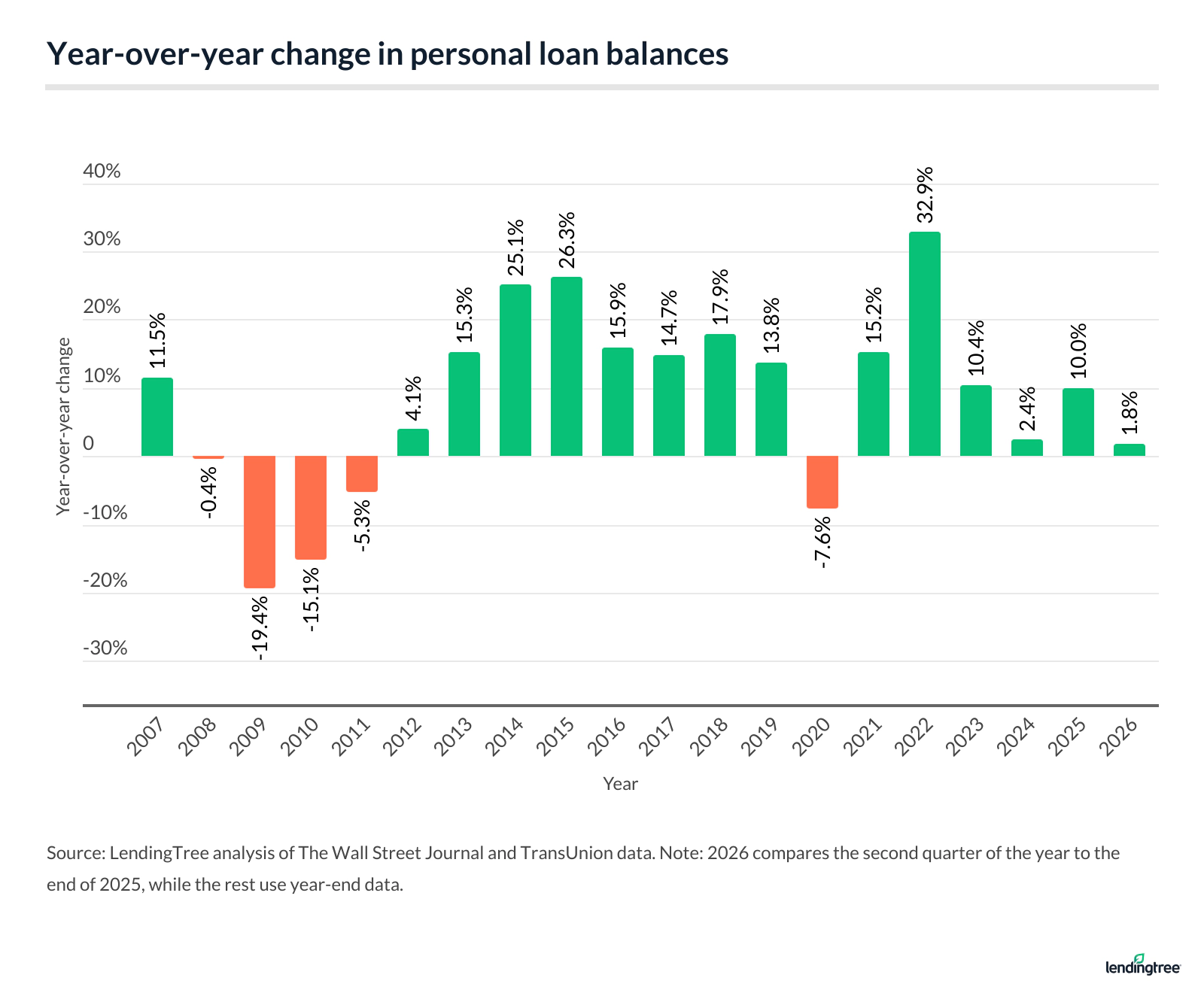
The nearly decade-long increase in personal loan debt ended in 2020 as the pandemic disrupted borrowing trends. Personal loan balances fell 7.6% that year, marking the first decline since 2011.
Personal loan balances rose 15.2% in 2021, reversing the previous year’s decline. As of Q2 2026, balances were 1.8% higher than at the end of 2025.
The chart below shows annual changes in personal loan debt since 2007.
Personal loans account for 1.5% of consumer debt
Personal loans account for 1.5% of outstanding consumer debt in the U.S., despite significant growth over the past decade.
By comparison, Americans owe $1.263 trillion in credit card debt, which accounts for 6.7% of outstanding consumer debt.
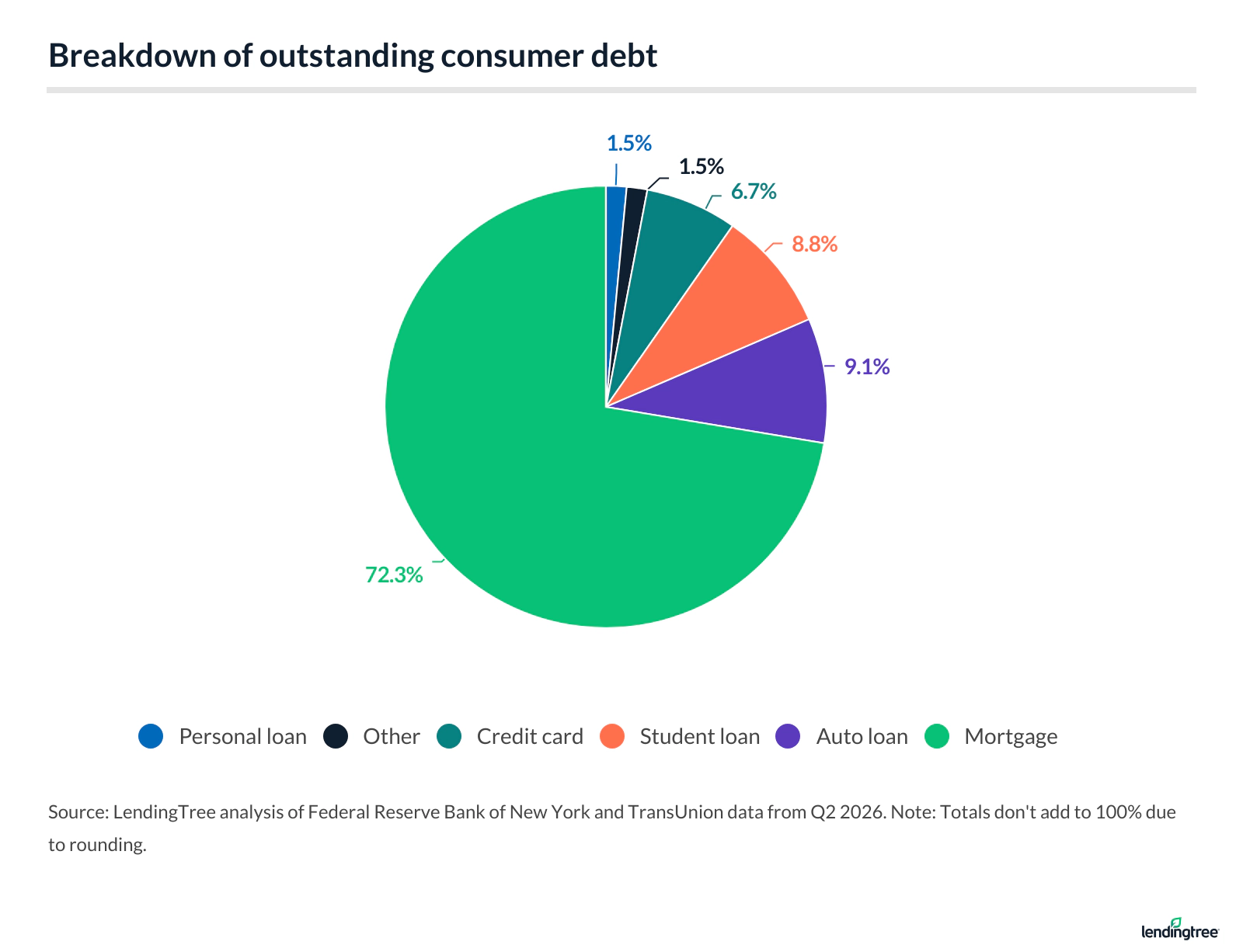
Excluding mortgages, personal loans account for 5.4% of nonhousing consumer debt.
Personal loan delinquency rate is 3.81% for borrowers 60 days or more past due
An estimated 3.81% of personal loan borrowers are 60 days or more past due as of Q2 2026, up from 3.37% in Q2 2025 and 3.38% in Q2 2024.
The personal loan delinquency rate remains higher than the rates for other major forms of consumer debt, including mortgages (1.56%), auto loans (1.51%) and credit cards (2.26%). (Note that credit card delinquencies are tracked at 90 days or more past due.)
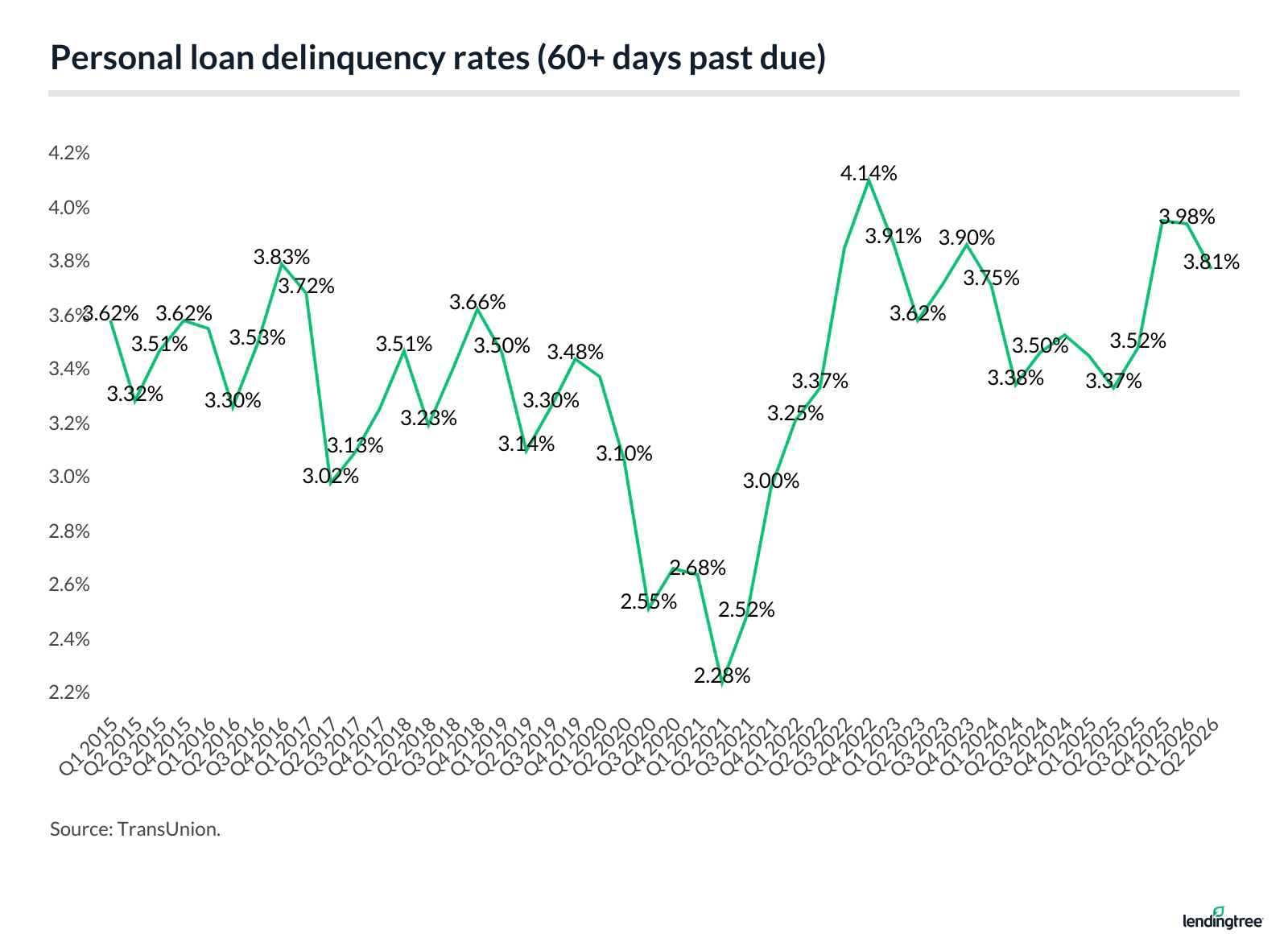
For historical context, the 30-day delinquency rate for consumer loans was 4.77% in 2009, the year the Great Recession ended.
The average personal loan debt per borrower is nearly $11,700; APRs vary by credit score
The average personal loan debt per borrower is $11,694 as of Q2 2026. That’s little changed from recent years:
- $11,676 in Q2 2025
- $11,687 in Q2 2024
- $11,548 in Q2 2023
Borrowers with credit scores of 680 or higher received average personal loan APRs below the average APR on new credit card offers, according to the data.
The average APR on new credit card offers is 23.80% as of August 2026, with minimum and maximum rates between 20.20% and 27.41%. As the table below shows, personal loan APRs generally rise as credit scores decline.
Personal loan statistics by borrower credit score
| Credit score range | Avg. APR | Avg. loan amount |
|---|---|---|
| 720+ | 15.69% | $20,121 |
| 680-719 | 22.86% | $17,670 |
| 660-679 | 26.64% | $15,291 |
| 640-659 | 28.28% | $13,900 |
| 620-639 | 29.65% | $12,942 |
| 580-619 | 31.01% | $12,218 |
| 560-579 | 31.58% | $11,516 |
| Less than 560 | 30.44% | $11,850 |
Borrowers with lower credit scores generally face higher APRs, though rates vary by borrower and loan.
Consumers often use personal loans to pay down debt
More than half (52.4%) of LendingTree users who take out personal loans report using the funds to pay down existing debt, including 42.4% for debt consolidation and 10.0% to refinance credit card balances.
The next most common reasons for obtaining a personal loan are covering everyday expenses (8.5%) and financing home improvements (7.2%).
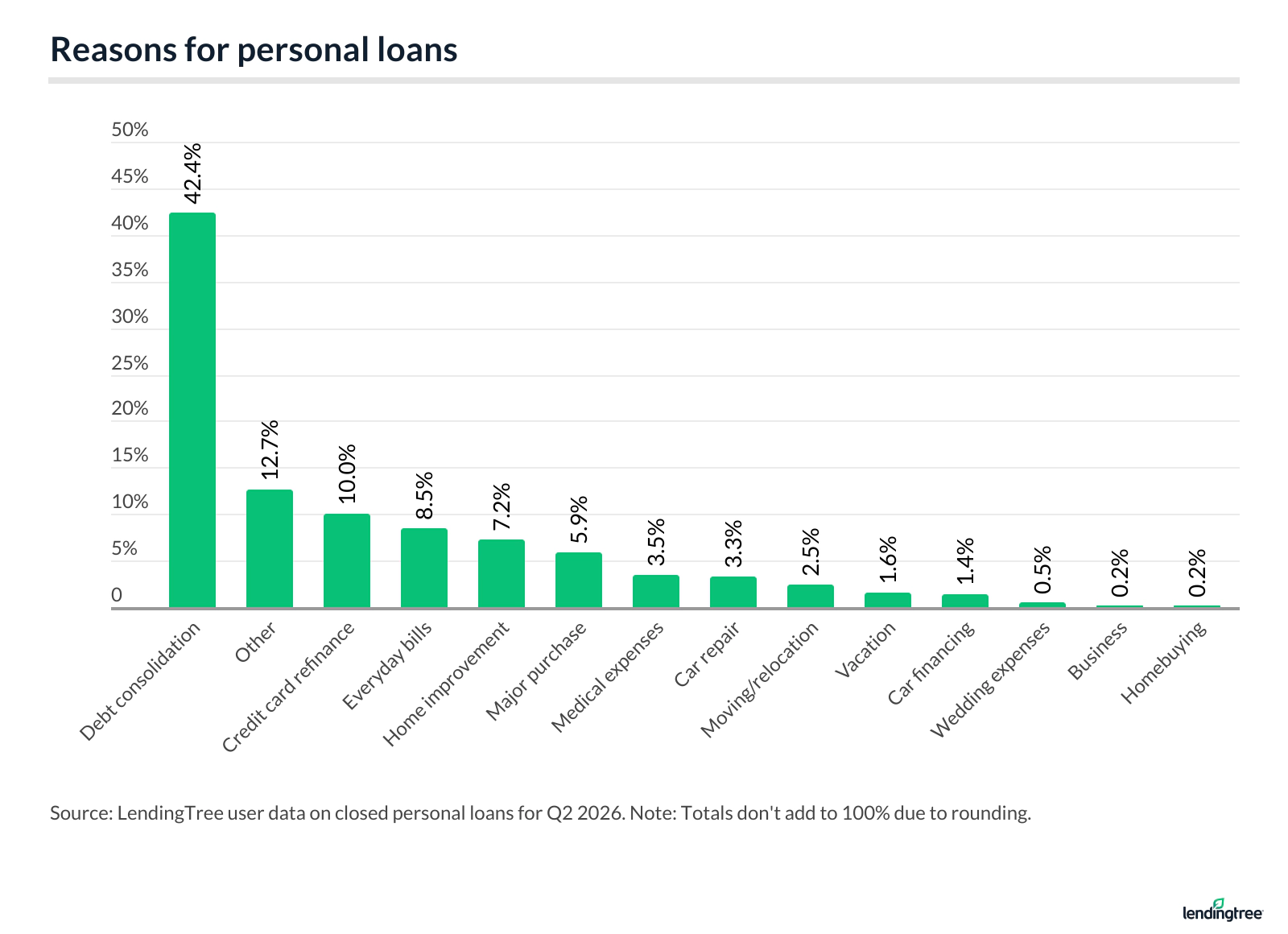
Personal loans can help borrowers consolidate higher-interest debt or meet other financial needs, but whether they save money depends on factors such as borrowing costs, repayment terms and the borrower’s repayment habits.
Personal loan debt shows room for further growth
Personal loan debt has continued to grow in recent years, though whether that growth continues will depend on economic conditions and demand for credit. Rising credit card balances may contribute to demand for personal loans, particularly among borrowers seeking lower-cost ways to manage existing debt.
Many borrowers use personal loans to consolidate credit card balances, and these loans can reduce borrowing costs when they offer lower interest rates than existing debt. If you have really good credit, a 0% balance transfer credit card may be a more cost-effective option for consolidating certain debts. Personal loans, however, may be a better fit for some borrowers depending on loan terms, balances and repayment timelines.
Interest rate trends may differ from borrowing trends. LendingTree data shows personal loan rates have remained relatively stable over the past year, even as the Fed cut rates three times in the final four months of 2025. The Fed has held its target rate throughout 2026, but personal loan rates may not move in lockstep with the federal funds rate.
Personal loans aren’t used exclusively by consumers facing financial hardship. Borrowers also use them to finance home improvements, weddings, vacations and other large expenses. Demand for personal loans is influenced by a range of factors, including borrowing costs, lending standards and household spending needs.
Although future borrowing trends will depend on economic conditions and lending standards, personal loan balances have room to rise further if demand remains strong. Borrowers who use personal loans to refinance higher-interest debt may be able to lower their borrowing costs and replace revolving debt with fixed repayment terms.
Sources
- TransUnion
- The Wall Street Journal
- Federal Reserve Bank of New York
- LendingTree
Get personal loan offers from up to 5 lenders in minutes